Leading When the Conditions Keep Changing

The smoke came in fast.
Within hours, the sky had turned an unsettling orange—a burning sky—and the air felt heavy and unfamiliar. The Boundary Waters closed, plans changed, and the situation seemed to be moving faster than we could understand it. We were told to prepare for the possibility that this might be our reality for some time.
After COVID, many of us know that posture well. We have learned how quickly disruption can become a new normal. So we jumped to the conclusion we knew: This is it. Hunker down. Prepare. Rearrange everything. Get ready to endure.
And then today, the sky here is blue.
It is beautiful, almost ordinary. Yet not far away, around Ely, conditions are worse and the danger is more immediate. The Boundary Waters remains tied to our lives and livelihoods even when the view from our own window has changed.
The sky can be clear here and dangerous there. Yesterday’s alarm can coexist with today’s beauty. A closure can be an inconvenience for one person, lost revenue for another, and a necessary protection for someone else. Relief, anxiety, gratitude, and guilt can all be present at once.
I want to be honest about what that uncertainty does to me: it makes me anxious.
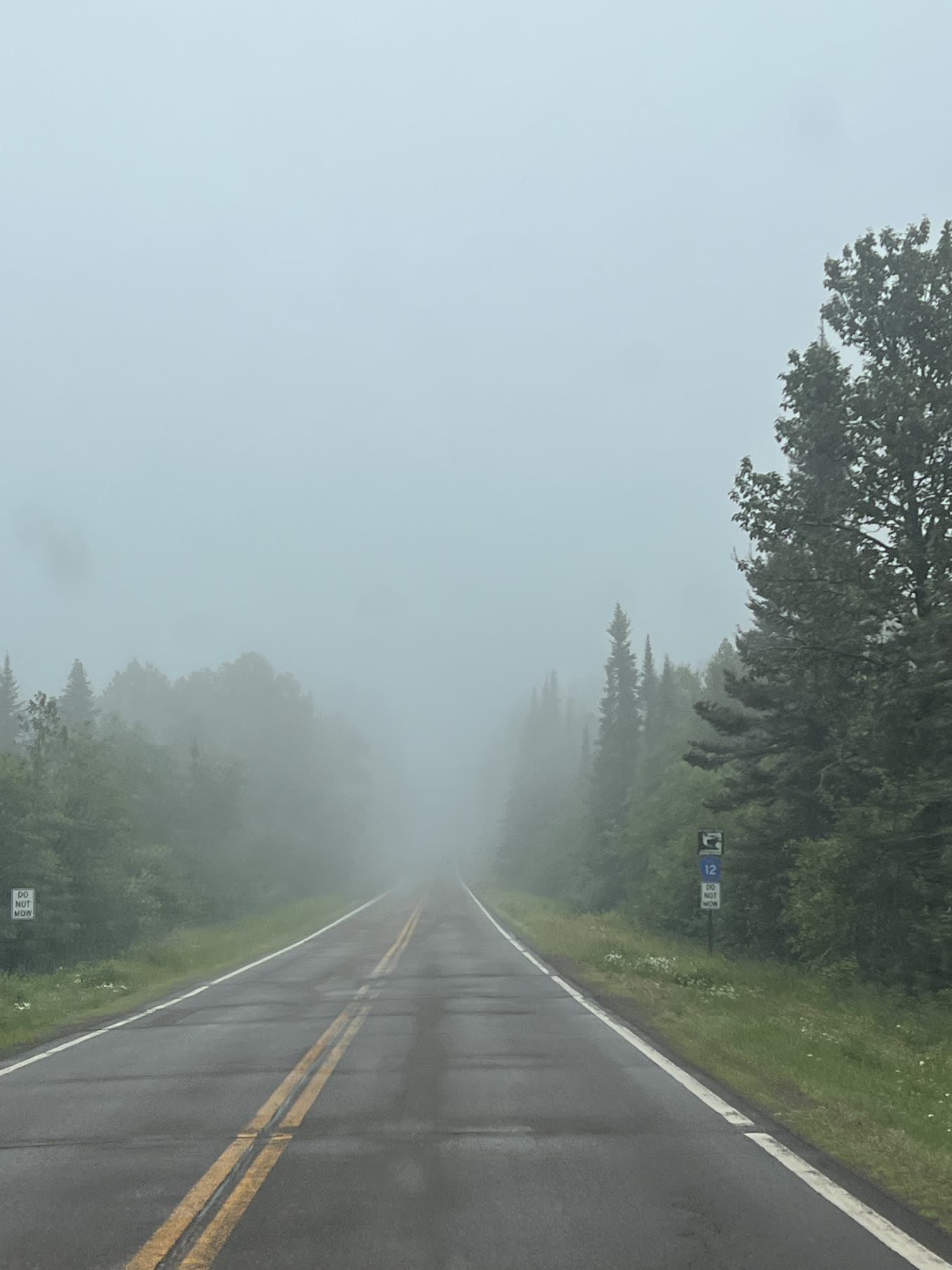
I worry about my family, my community, and the people whose homes and livelihoods are closer to the fires. I catch myself looking for new information even when there may be nothing new to learn. I want answers that do not yet exist and assurances no one can honestly provide.
I am experiencing this moment through several roles at once.
I am married to a business owner whose livelihood is connected to the tourism our forests and shores bring. When access closes and trips are canceled, uncertainty becomes lost revenue. We wonder how long the disruption will last, how many customers will change their plans, and which costs will continue. Those questions enter our home and become part of our family’s calculations.
I am also a hospital board member. In that role, the questions are about readiness, staffing, communication, public health, and the ability to care for people if conditions worsen. Decisions must account not only for what is happening now, but for what could reasonably happen next.
As a member of an NGO board and a community leader, I think about the organizations people depend on when their own capacity is stretched. Those institutions need to remain useful and responsive—even while the people leading them manage the same uncertainty themselves.
I am also a remote employee. My work is hundreds of miles from any wildfire. Emails still arrive, meetings remain on the calendar, and the people I work with may be living through a completely ordinary day.
One moment, I am focused on a task unrelated to smoke, fire, or closures. Next, I am checking the latest information, talking through what the disruption means for our family, or making sure my children are safe. None of these responsibilities pauses because another has become more urgent.
That is one of the hardest truths about leading through uncertainty. We imagine leadership as a role we step into. In reality, many of us move among several roles at once, all with the same limited information and finite attention.
Each role asks a different question.
As a parent: Are my children safe?
As a spouse: What does this mean for our family and the business we depend on?
As a board member: What does the organization need to anticipate?
As a community leader: Who might be overlooked, and what responsibility do we have to them?
As an employee: What work still needs to be done, and what can reasonably wait?
Leadership in a moment like this is not the ability to produce one perfect answer. It is the discipline to ask the right question for the responsibility in front of you—and the willingness to make decisions without pretending to possess certainty.
No one can honestly offer certainty in a fluid situation. Conditions change. Forecasts change. Smoke moves. What was sensible yesterday may need to be reconsidered today. Changing a decision in response to new information is not necessarily indecision. Sometimes it is responsible leadership.
A better standard is whether we acted thoughtfully with the information available, communicated what we knew and did not know, and remained prepared to adjust. It means weighing the cost of acting too soon against the cost of waiting too long, while placing people’s safety ahead of our desire to preserve a plan.
People do not need false reassurance. They need honesty about what has changed, what has not, and when they can expect another update.
“I don’t know yet” can be a responsible answer when followed by: “Here is what we are watching, here is what we are doing now, and here is when we will reassess.”
Alongside my anxiety, I also feel confidence in this community.
The Northland knows something about endurance. People here understand long winters, difficult distances, changing weather, seasonal economies, and the necessity of depending on one another. They know how to adapt plans, share information, check on neighbors, and keep doing the next necessary thing.
That resilience should not be romanticized. Calling people resilient cannot become an excuse to overlook their losses or expect them to carry every burden without support. Endurance does not mean the situation is easy, and strength does not make people invulnerable. Resilient communities still need resources, rest, good information, and help.
But resilience is real here.
It lives in businesses adjusting, public servants doing difficult work, health care professionals preparing for what may come, and neighbors paying attention to one another. It lives in the recognition that none of us will navigate this entirely alone.
That does not remove my anxiety. It gives the anxiety somewhere to stand.
Good leadership requires us to notice the differences in what people are carrying. It asks us to look beyond our own disruption and understand who bears the greatest burden. It also asks us to resist flattening a complicated reality into either catastrophe or reassurance.
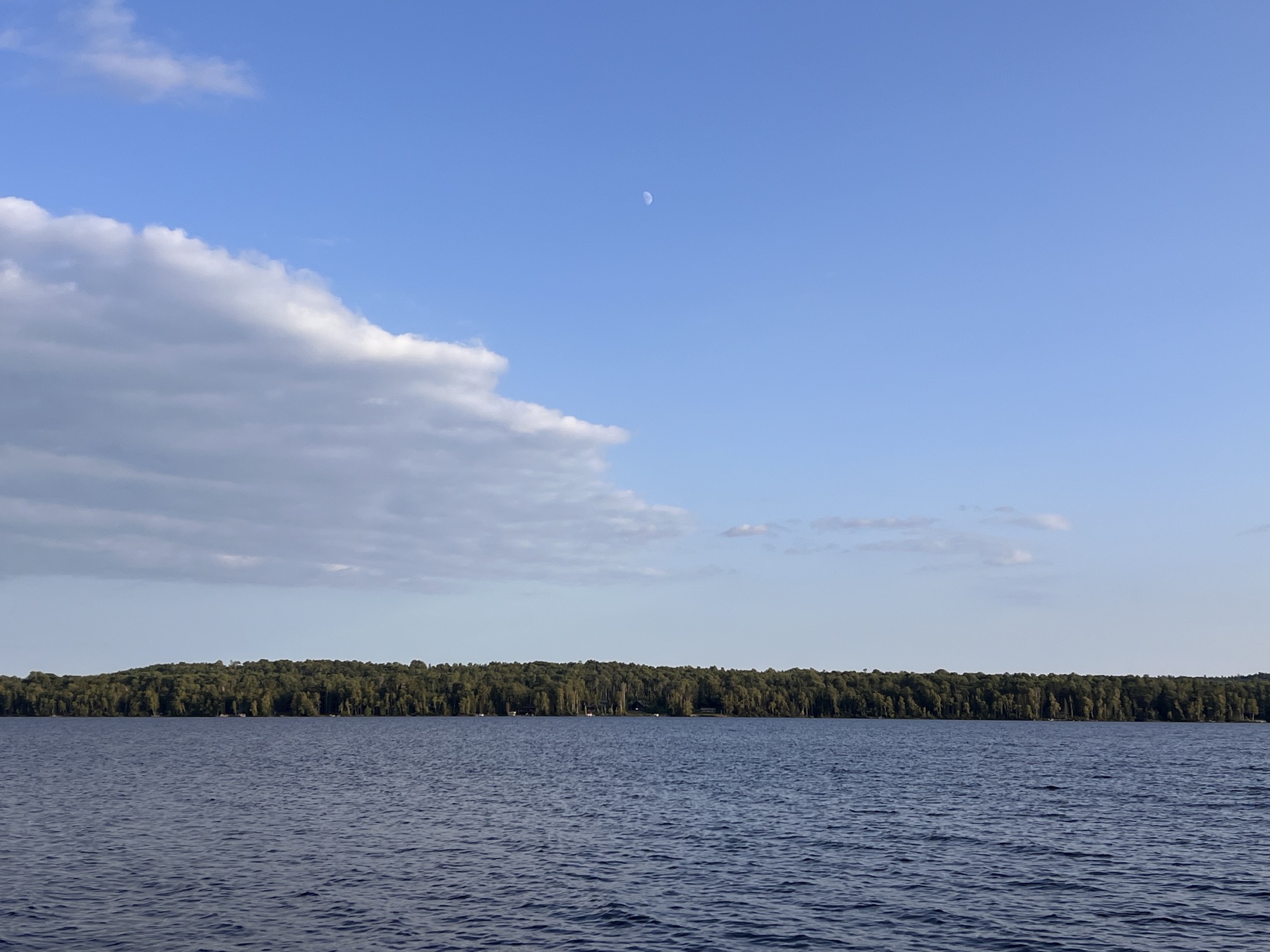
Today’s blue sky does not mean we were wrong to prepare. Yesterday’s smoke does not mean every day ahead will look the same. The beauty here does not erase the danger near Ely. All of those things can be true together.
I do not have a neat lesson while the situation is still unfolding. Perhaps that is the point. Leadership during uncertainty is practiced in incomplete conversations, revised plans, interrupted workdays, and decisions we wish we could make with more information.
Right now, leadership looks less like having a map and more like helping people remain oriented while the landscape keeps changing.
It means paying attention. Protecting people. Naming what we do not know. Making the best decision the present facts allow. Staying humble enough to revise it. And remembering that even as we manage the responsibilities closest to us, some of our neighbors face risks and losses far greater than our own.
We cannot always create certainty for the people who depend on us. But we can offer steadiness, honesty, and care. We can hold fear and hope, danger and beauty, preparation and adaptability together.
And we can trust in a resilience built across the Northland over generations—not a resilience that denies fear, loss, or contradiction, but one that allows us to face them together.